Capitol Communicators: Profile of Carrie Fox, Founder and CEO, Mission Partners
Capitol Communicators is a profile series spotlighting the people shaping advertising, digital, marketing and public relations in the Mid-Atlantic. Carrie Fox knows that words have power. She also believes
Capitol Communicators is a profile series spotlighting the people shaping
advertising, digital, marketing and public relations in the Mid-Atlantic.
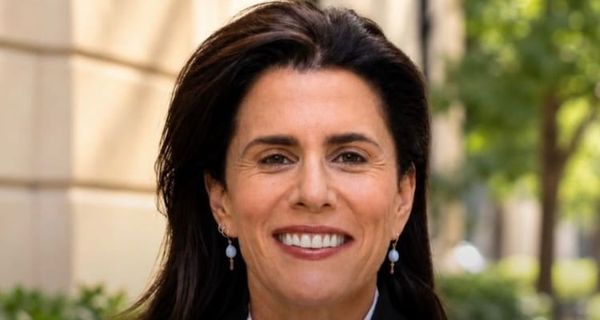
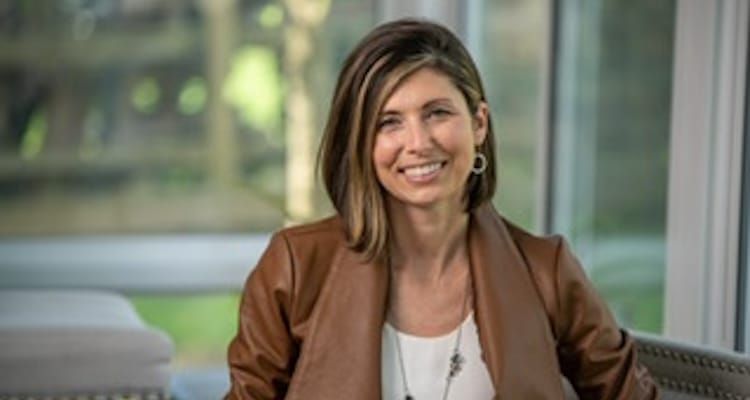
Carrie Fox knows that words have power. She also believes that how we do business is just as important as what we say. So when her definition of success changed, she took a bold step: closing a successful communications firm she had built up over 14 years to start something new. That venture, Mission Partners, is a social impact communications firm and Certified B Corporation, built on the belief that a company should not only help clients make a difference, but model those values itself.
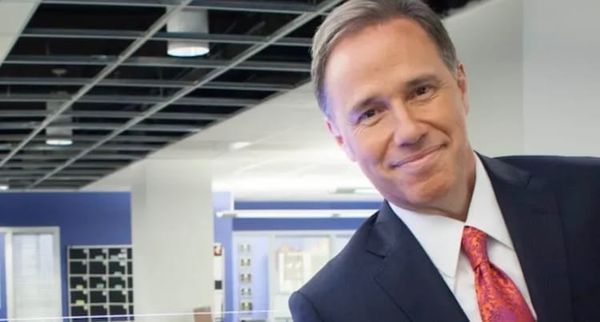
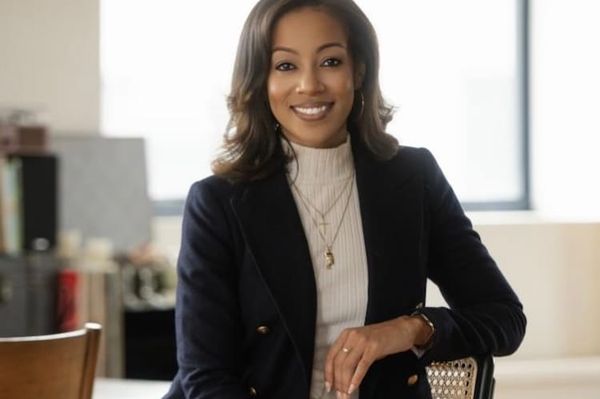
Fox has also been an influential advocate for asset-based messaging, a game-changing approach to communicating about social issues that focuses on people’s strengths, contributions and potential, rather than their problems or what they lack. It’s a shift in perspective that can change not only how we tell stories, but how we see the people and communities at the heart of them. Her work is a major reason she’s being honored as one of three finalists for Washington Women in Public Relations 2026 Woman of the Year, along with Dr. Sheila Brooks and Shakirah Hill Taylor. The WWPR Woman of the Year will be revealed Friday, October 23rd.
Fox’s interest in inspiring change goes beyond running Mission Partners. She hosts the Mission Forward podcast, designed to create a community for social impact communicators, and writes a weekly column, Finding the Words, with very human reflections on what it takes to be a force for good. She also invests in developing the next generation of social impact leaders — all in service of a larger mission to create positive change.
Her contributions have earned longstanding recognition and respect in the PR community. WWPR first honored her as an inaugural Emerging Leader in 2010.
Through it all, Fox remains committed to opening doors for others. Her leadership philosophy says it all: “Believe in people more than they believe in themselves.” And, as she wrote in one of her columns: “None of us moves through the world alone, and the best we can ever do is make the journey a little easier for the people who travel alongside us.”
Carrie, tell us about yourself.
I’m a New Jersey native who proudly calls Maryland home. I’m the founder and CEO of Mission Partners, a women-owned social impact communications firm and Certified B Corp., and founder of Mission ForwardTM, a national education platform for purpose-driven leaders, where I host a podcast of the same name, and write a weekly column called Finding the Words. For more than 25 years, I’ve partnered with nonprofit, foundation, and social impact leaders, using communications as a driving force to advance progress on some of our nation’s most pressing issues. I also serve on the Board of Trustees at my alma mater, Loyola University Maryland, where I chair the Student Development Committee. But that’s only a small part of me. I’m also the mom of Sophia (16) and Kate (13), who I have the joy of raising alongside my love of 22 years and counting, Brian. When not working, you’ll find me in the garden, on a run, reading a book, or testing out a new recipe in the kitchen — that is, of course, if I am not in the car shuttling my two athletes to practice! I believe deeply in leaving the world better than I found it, and I’m grateful for the chance to do work I love with people I admire while still feeling like I am learning something new every day.
Being a finalist for WWPR’s Woman of the Year is a significant achievement in this region of super-performing women. And this is your second time being recognized! What does this recognition mean to you at this point in your career?
A region of super-performing women is right! And it’s a real honor to be considered among such impressive women leaders, particularly because this community knows better than most how hard this work really is, and they know what it takes to sustain it after so many years.
You know, WWPR was the first community to formally recognize my work as a social impact communicator by naming me an inaugural Emerging Leader in 2010. To be back now as a Woman of the Year finalist is quite humbling.
Your professional journey seems very personal, too. You founded a very successful PR firm, C. Fox, then shut it down, to follow a different path. That led to your current venture, Mission Partners. You wrote about this shift in your book; can you please share a little about it here?
I started C.Fox Communications in 2004, when I was 25 years old. I was so proud of what we built as a mission-driven firm, and that every single one of our clients over those 14 years could say, without hesitation, “What we do, we do for the good of others.”
But several years in, I realized I wanted more than a firm that served mission-driven organizations. I wanted to build a company that was itself a model of the change we talked about, where the way we operated was as intentional as the work we produced. To me, that was the real difference between doing good work and building a good business.
So I made the hard decision to wind down C.Fox and start Mission Partners in 2017. We pursued B Corp certification soon after and became certified in 2018. That shift, in how I first viewed success to how I’ve come to view purpose, is a lot of what my book (and my business philosophy) is all about.
The first time I learned about an “asset based” messaging framework my brain popped. Please share what that means and how you apply it.
Ah, that’s great! The first time I learned about asset-based framing was before I even knew it had a name. It was 2008, and I was leading PR efforts on a TODAY Show interview that I had secured for one of my clients. It was on that set that I saw then-high school student Jacques Wells apply the technique effortlessly. I write about Jacques in my book and in this related blog post. And then I came to learn about the technique formally from the movement’s real founder, Trabian Shorters.
So much of what we communicate in the social sector, and particularly among nonprofits, is about what we don’t have, or what is not working. Nonprofit literally has “non” in its name. Perhaps that’s part of the reason why so many mission-driven organizations have come to lead their stories with what’s wrong. It’s well-intentioned, but it backfires and can reinforce the very stereotypes we’re often trying to dismantle.
Asset-based framing leads with strengths and contributions. It connects outcomes to their systemic causes vs. the traits of the people living in them. And most importantly, it treats the people in the story as the lead actors, not the recipients of someone else’s charity.
How do I apply it? Before writing, I really work to understand who is at the center of a story, and how my language may make them feel. If I were to put the pen in someone else’s hand, for instance, how might the story change?
Once I saw its power, as I did with Jacques, I could never unsee it. It’s a wonderful technique for communicating that doesn’t just challenge the words we use but also helps change how we understand each other and the world as a result.
I know that an important part of WWPR’s consideration is giving back to our professional community and opening doors for other women. Can you share what that means to you?
I often say that people believed in me well before I believed in myself. First, my mom, then my high school art teacher, then my first boss, and, of course, so many of my early WWPR mentors.
As a result, I’ve always thought about leading Mission Partners as if we’re a teaching hospital, where my responsibility is to believe in people more than they believe in themselves, too. I find joy in investing in people first, and that’s how I like to give back to our professional community, too. That includes the programs I’ve launched and led at my alma mater, Loyola University Maryland, such as the Social Impact Fellows Program, and the Social Entrepreneur in Residence Program we launched here at Mission Partners. It also includes how I choose to invest in the next generation of social impact leaders through a well-paid fellowship for college students. And I am really proud of the role I play as a member of the Loyola Board of Trustees; having graduated 25 years ago and knowing firsthand the power of higher education, I feel immensely proud to chair the Student Development Committee and to support students through such a formative time in their lives.
What are the most significant changes or trends you see happening/ coming in the communications industry? How are you dealing with it?
The obvious one is AI. It’s already changing how our field – and all of our clients – write, research, and produce. But candidly, I am less concerned about the tool and more about how it is used. We know full well the concerns about AI, and I believe our job as leaders is to set the standards that the tech giants and our own government haven’t yet. As leaders, we need to proactively determine how we’ll use it in our organizations, and on whose terms. Used well, I really do think AI can free us up to be more human, not less.
The bigger issue, though, is trust. Any one of us is communicating to an increasingly fragmented and often skeptical audience, so being able to show up honestly, transparently, with care and accountability has never been more important. Showing up in that way is just as important for the Fortune 100 CEO as it is for the first-year employee. We can’t hide behind this technology. If anything, the times we’re in call us all to be more human than ever.
What are the skills necessary to be successful today?
Everyone’s racing to add technical fluency, and for good reason, right? We should absolutely know what the tools are capable of and how to use them wisely. But the skills that best support our ability to connect and communicate through changing times are not the tech tools; they’re the human ones, like the ability to listen without distraction, to practice empathy, to analyze and assess information for ourselves, and to use our knowledge to connect the dots. Some people call them soft skills, but I think they’re actually power skills, and I think they will become increasingly important in the years ahead.
What advice helped you most in your career and is that advice still relevant today?
The advice I received on the day I graduated from college remains the most central to how I show up in my professional life. It was my uncle who said, “Make life 90% about who you are and 10% about what you do.” I’ve thought about that precept in every early job I had, and in every decision I’ve now made as an agency owner. While I love my work (and feel a deep sense of purpose in it), I am much more than my work, and this great bit of advice from Uncle Abe has served me well and always helped keep my priorities in check.
Note: WWPR’s Woman of the Year event will be held Friday, October 23, at the Potomac Hotel.
The keynote speaker will be Karen Finney, CNN political commentator.
The Woman of the Year 2026 will be announced at the event.
Check out other Capitol Communicators profiles.
These profiles allow you to meet some of the most interesting and insightful pros
in our region, and learn how they stay ahead during a time of constant change.