
How AI is Transforming Human Research: Meet Tom Weiss of MX8 Labs
MX8 Labs aims to democratize qualitative research using AI
In an era where artificial intelligence is rapidly transforming the media, marketing, and communications landscape, all of us have to wonder: how will the voice of the customer – arguably one the most important factors for success of any business— survive?
I don't have to tell this town how screwed up polling is, we all have developed trust issues. There are some big problems in research. Statistically accurate surveys of the complex characteristics driving human behavior can be labor intensive, expensive, riddled with bias and take so long to produce that by the time the insights are gathered, the take even more time to act on. As a result, so many businesses that would love customer insights skip that step because of costs, time and lack of people power and expertise to make it feasible. In this scenario, the human perspective gets lost as the automated robots take over.
Actually, the opposite is happening. Costs are coming way down, time to insights are increasing and the sheer amount of research from actual humans is actually poised to increase.
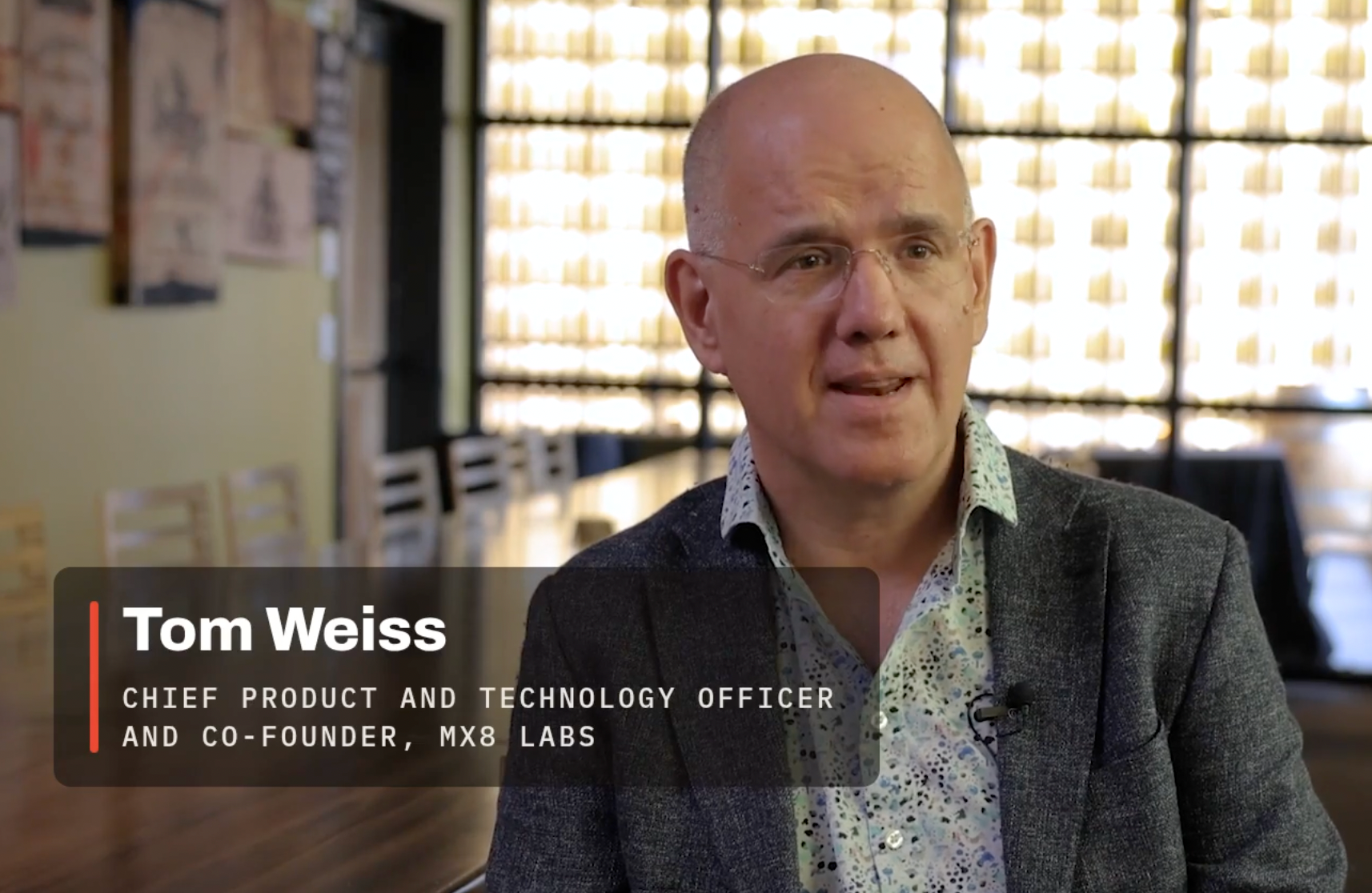
As part of a special series with The Measure and the Coalition for Innovation Media Measurement (CIMM), I recently sat down with Tom Weiss, Chief Product and Technology Officer and Co-Founder of MX8 Labs. As you can see /hear/read below, Weiss offers a grounded, forward-looking vision with some really good news: AI doesn’t replace human insight—it demands more of it.
What is MX8 Labs?
MX8 Labs is a next generation consumer insights platform where you can collect data from real respondents and report on it like you have done traditionally with market research, but in a fraction of the time, a fraction of the cost, and with no sacrifice on the level of sophistication of the work that you’re doing.
What is the future of research?
The future of research is fundamentally grounded in humans, and it’s understanding what drives humans to make their purchase decisions and their brand decisions and their voting intentions, et cetera. So I’m fundamentally of the opinion that, with AI coming along, people are gonna need more data to train their models. They’re gonna need more data. They’re gonna be able to run more experiments, and that’s gonna require more research from more humans, and it’s about the same thing, but faster, better, and cheaper.
What are you doing to make the marketplace better?
So the main thing we’re doing is we’re making data available more cheaply and more widely. So for example, at the moment, you can only afford to do brand lift and incrementality on your biggest campaigns. With our platform, you can afford to do it on all of them, and you get results while your campaign’s still in flight.
How are you using AI?
We’re using AI to optimize all of the parts of the process that don’t require human judgment and human insights to do. So it’s those simple things like programming a survey that historically has taken a long time and been problematic. AI can now do that automatically and leave humans to make judgment calls on the important things.
What progress would you like to see by 2027?
A lot of people who work in research at the moment are in a bit of a tight spot. They’re being asked to do more for less, and they’re feeling the squeeze. And I don’t think that’s good for anyone in the industry at all. What my real aspiration for twenty twenty-seven is that’s the year when technology solutions like ours start to take people out of that squeeze and then able to spend more time focusing on the business problems and actually what those insights are, and less time being squeezed by operational slowness and legacy technology platforms and demands that they can’t actually meet for their customers.
Where does measurement fit in an AI-powered world?
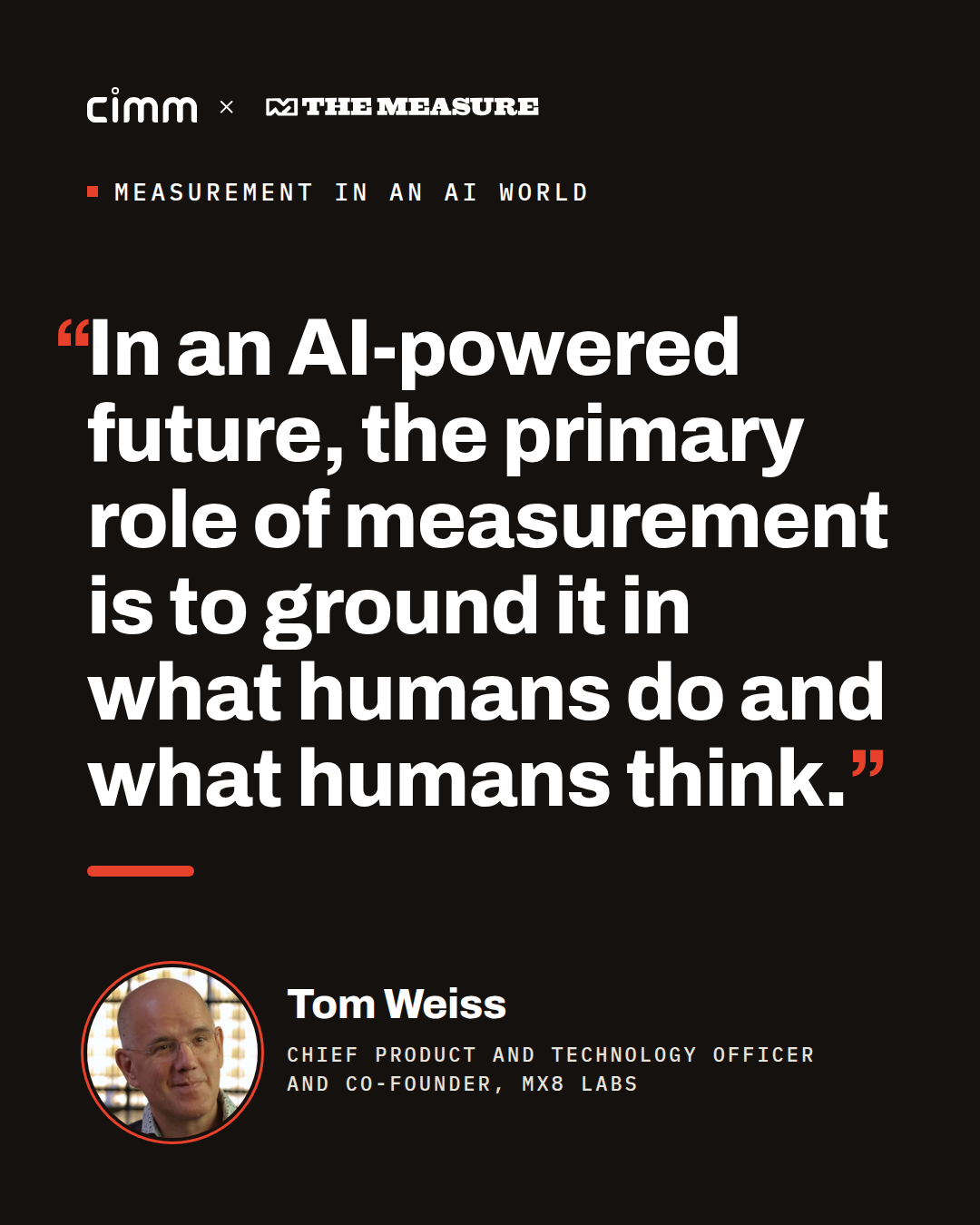
I would say it grounds it in reality. … In an AI-powered future, the primary role of measurement is to ground it in what humans do and what humans think.
What are you most excited about when it comes to AI?
I’m most excited about all the new career and job opportunities that AI is going to offer people. It’s very clear the roles that are going away, and generally, they’re the ones that can be automated. It’s the automated data entry. It’s some of the manual coding roles. But we’re only just starting to see what the new roles that are gonna come into our industry, and it’s gonna be people who … I don’t know what they’re gonna be though. That’s the only problem.
How do you use AI in your own work?
So I’m chief product and technology officer at MX8 Labs, so a big part of my role has always been overseeing computer programmers. And now, increasingly, I’m actually overseeing AI agents rather than overseeing computer programmers. So I’m specifying work and instead of having a human coming back a week later for me to review it, twenty minutes later, the work comes back, and I have to review it. So I spend a lot of my time giving instructions to AI programming agents, reviewing what they do.