
State of Wikipedia report for April 2026
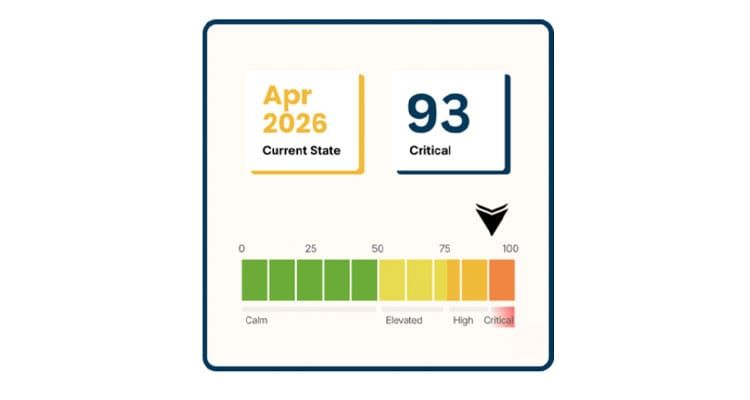
In April 2026, the Wikipedia Chaos Index rose to 93, marking another month at critical levels. The platform remains highly volatile, so our advice remains unchanged: this isn’t the time to publish new drafts, update controversial content, or engage in debates with editors.
Wikipedia’s Arbitration Committee is busier reviewing disputes but slower making decisions. Engagement on case requests reached its highest point in 2026 this month while motion activity hit the year’s low, including a 3-week period of zero activity. This suggests the committee (Wikipedia’s final dispute resolution authority) is grappling with complex or contentious cases, or facing a backlog as disputes pile up faster than they can be addressed.
Arbitration backlogs like this can signal stricter enforcement may be around the corner.
As we move into the second quarter of 2026, the friction between human-governed knowledge and generative AI has reached a new boiling point. While we’ve spent the last few months discussing “hallucination rates” and source verification, Wikipedia has finally made its stance official: strict restrictions on using AI to generate or substantially rewrite article content.
Following a lopsided community vote of 44-2, the platform has restricted large language model (LLM) usage to two very narrow exceptions: full-article translations and minor copyediting of an editor’s own work.
For PR and marketing professionals, this isn’t just a change in rules, it’s a clear signal that the community is aggressively insulating itself from the “AI slop” that has begun to overwhelm administrative noticeboards.This move is a direct response to a fundamental conflict: AI systems, by nature, often subtly alter meanings in ways that the original cited sources no longer support, a direct violation of Wikipedia’s core verifiability policies.
For those of us in communications, the stakes have shifted. It is no longer enough to have “accurate” content; your digital footprint on Wikipedia must now be demonstrably human-governed. Relying on automated drafting tools for drafts or talk page responses is no longer just a shortcut, it’s likely to draw immediate scrutiny from editors.
NOTE: The Chaos Index is a proprietary metric for measuring turbulence throughout Wikipedia and tracking the community’s current sentiment towards corporate-related pages. The index measures community actions such as editing frequency, content deletion, message board posts, and many other activities that contribute to unstable corporate page environments.