
State of Wikipedia report for August 2026
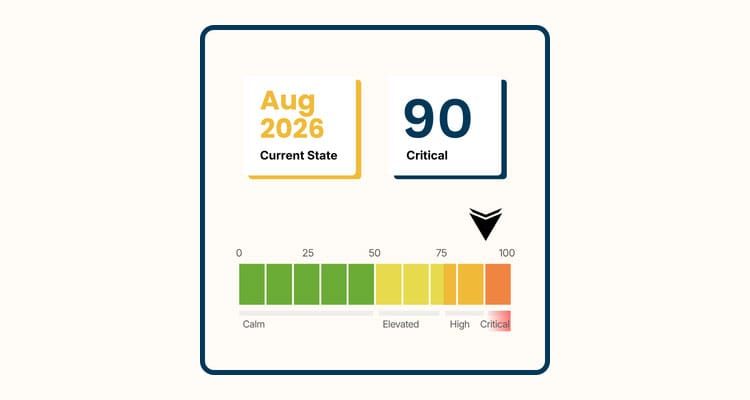
In August, the Wikipedia Chaos Index increased to 90, which is considered critical levels of chaos. This means that we recommend extreme caution and waiting until activity drops again for publishing new drafts, controversial information or engaging directly with editors.
The first marker of this increase comes from Conflict of Interest Noticeboard activity, which increased 40% month-over-month, a sign that Wikipedia is cracking down on anything that reads as even remotely promotional.
Though AfC submissions only increased about 5% in July, the decline rate increased dramatically in July, as Wikipedia editors grew more stringent with notability and neutrality requirements, especially with a severe increase in suspected LLM-generated content being submitted and rejected.
When Grokipedia launched last October as an AI-generated alternative to Wikipedia, Elon Musk positioned it as a direct competitor to the world’s largest online encyclopedia. It has since grown from roughly 885,000 machine-generated articles at launch to more than six million today.
But a recent analysis from Lawfare found a major problem: Grokipedia appears to have stopped updating its articles and processing suggested edits in late April. Researchers analyzed more than 34,000 pages containing over 225,000 suggested edits and found no accepted or rejected corrections after April 24. More than 13,000 suggestions are now sitting unresolved, despite the system previously processing many suggestions within minutes.
It’s an interesting reminder of just how difficult Wikipedia is to replace. Generating millions of encyclopedia articles is one thing. Keeping them accurate, current and accountable over time is something else entirely. Wikipedia has spent 25 years building not just its content, but the human editors, sourcing standards, revision histories, Talk pages and governance processes that continuously maintain it. As Lawfare notes, those systems also make Wikipedia’s disagreements and changes visible in a way an automated encyclopedia may not be.
Meanwhile, Wikipedia has become increasingly embedded in the broader information ecosystem. Google, Amazon, Meta, Microsoft, Mistral AI, Perplexity and others now use Wikimedia Enterprise to integrate Wikimedia data into their platforms at scale, while Lawfare cites research finding Wikipedia in roughly 25 million citations across AI systems, compared with about 356,000 for Grokipedia.
For organizations that have assumed Wikipedia might become less relevant as AI grows, the evidence continues to point in another direction. Wikipedia can be difficult to navigate and it certainly isn’t perfect, but after 25 years of becoming part of how information is created, maintained and distributed online, waiting for the next technology to make it irrelevant increasingly looks like the wrong bet.
Note: The Chaos Index Index is our proprietary metric for measuring turbulence throughout Wikipedia and tracking the community’s current sentiment towards corporate-related pages. The index measures community actions such as editing frequency, content deletion, message board posts, and many other activities that contribute to unstable corporate page environments.