Communicator Spotlight: Q&A with Kimberly Adams, Host/Correspondent at Marketplace, America’s Largest Broadcast Business Program
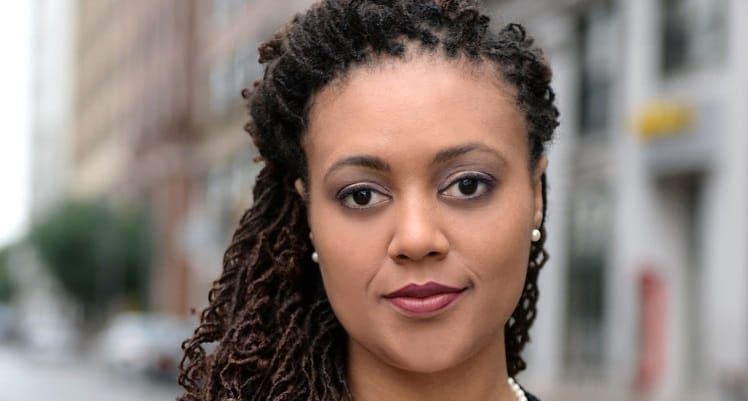
Capitol Communicator has been interviewing people who are or have been in the media about their careers and the media. Below is our Q&A with Kimberly Adams, a host/correspondent at Marketplace, America’s largest broadcast business program, reaching more than 14 million weekly listeners on more than 800 local public radio stations nationwide and millions more across digital platforms. She covers the intersection of politics and the economy from Washington, D.C., where she also serves as Chair of the Board of Governors of the National Press Club. Before moving to D.C., Adams was a Cairo-based freelance journalist reporting on the political, social and economic upheaval in Egypt following the Arab Spring. Her work aired on multiple networks in the United States, Canada, the UK, Germany, Hong Kong and elsewhere. While reporting in Cairo, she received awards from the National Association of Black Journalists, the Religion Communicators Council and the Association for Women in Communication. She was also competitively selected for the International Women’s Media Foundation “Great Lakes” Reporting fellowship to Uganda, where she reported on environmental, economic and LGBTQ issues. Prior to freelancing, Adams worked as a producer for NPR from its D.C. headquarters, covering politics, arts, culture and breaking news. She holds degrees in journalism and political science from the University of Missouri-Columbia and a graduate diploma in political science from the American University in Cairo.
Kimberly, tell us more about what are you doing now?
I’ve been pretty busy lately covering the economic policies coming out of the Biden administration. The latest COVID relief bill, the infrastructure plan, and the increased focus on racial equity in policy all have strong economic threads. A good deal of my reporting is explaining how individual policy changes will affect people, and how money and influence shapes what happens in Washington. Outside of my day-to-day coverage, I often moderate panels and special events, such as recent installments in the Federal Reserve’s “Racism and the Economy” series, as well as a collaboration with APM’s (Marketplace’s parent company) “Call to Mind”. We just finished recording a special on mental health that will be airing on many public radio stations in May. I feel really passionately about this topic and was glad to be able to host this special.
How did you get your start?
I decided I wanted to be a journalist as a teenager, but my school didn’t have a newspaper or anything like that. I kept getting turned down for internships at local stations in St. Louis because I was still in high school. One Sunday when I was 16, a TV news crew came to my church to do a story on the groundbreaking ceremony for a new building. I was a “junior usher”, but snuck away from my post during service as the crew was leaving and chased them down the street to ask for their help getting an internship. The reporter and cameraman did help me, I started out working evenings and weekend on the assignment desk, and never looked back.
Why did you want to go into news?
I saw it as a way to help people. As a kid, I was convinced that if people just had more and better information, they would make better, kinder choices. I still believe that to some extent, but now I lean more on the understanding that information being filtered only through certain views and perspectives is harmful to many communities, and that there are people out there who exist to dissemble and mislead and do harm. Journalism is a way for me to work to address both of those things. Plus, it can be a lot of fun.
What would have been your second career choice?
I started early, so I didn’t really have a plan b. However, I was taking flying lessons in high school with a scholarship from the St. Louis chapter of Black Pilots of America, and considered going to the Air Force and/or becoming a pilot. Maybe if I had followed that path, I would be an astronaut now, which would be a great second career if I were better at math.
What are the best and worst parts of working in the news media?
The best part is having the opportunity to meet new people are hear their stories, and to try new things and learn new topics all the time. Reporting has taken me to many different parts of the country and the world, and opened up experiences and windows into peoples lives I doubt I would have encountered in other roles.
The worst part is the relentlessness of it at times, especially when covering conflict and violence. Secondary trauma is a real thing in journalism, and journalists often cannot step away from traumatic events or “just turn off the news” for a break. The International Women’s Media Foundation is doing a lot of important work on this, and I’m excited to be working with them to develop a new generation of media safety trainers who are folding mental health care into conversations around media/journalist safety.
Who have been your role models?
Some of my first role models were the people in the newsroom in St. Louis who took a chance on me and made it their business to see me succeed. Some of them I’m still occasionally in touch with are Terry Cancila and Sean Hadley, who ran the assignment desk; Kelly Hoskins, who is a reporter in St. Louis, and George Wise, the videographer who came to my church that day and helped me land that first crucial internship.
Other role models came later in my career as I had the privilege of working with amazing journalists in public media, where I looked to women like Michelle Norris, Korva Coleman and Liane Hansen as examples of professionalism and grace and excellence of work, even in challenging circumstances.
What stories moved you the most?
My reporting in Egypt after the revolution really shaped me as a journalist. It revealed the stakes of reporting in conflict (especially for local journalists), as well as how much the “Western lens” of a lot of international journalism shapes narratives at home and abroad. I was also covering protests in Cairo as protests erupted in my hometown of St. Louis following the police killing of Michael Brown, which factored into my decision to return to domestic journalism in 2015.
More recently, so many stories during the pandemic have brought me to tears – seeing the early indicators this was going to be devastating for communities of color and low-income people – and then watching it happen. Also covering the disproportionate economic fallout of the pandemic and getting pushback from audiences unused to hearing regularly how racism is irrevocably tied into the economy.
On a positive note, I was moved and inspired in 2020 by the drastic increase in civic engagement around voting. I did several stories about people and businesses from across the political spectrum stepping up to help people vote in the pandemic.
What do you think is the biggest challenge for the media going forward?
Diversity is the obvious one. Our industry will fail to be relevant as long as news media leadership doesn’t reflect, include, and empower people who reflect the diversity of our communities. Lots of work is happening on this, but the pace of change is slow and often change is coming too late. We are hemorrhaging talented people of color and LGBTQ folks who leave the industry rather than deal with the racism and discrimination that still exists in media.
The other big challenge is the business model. Technological changes and even more competition for people’s attention is making it harder for news organizations to find a model that’s economically viable, much less one that can fund the expensive work on the kind of data and investigative journalism we need these days. I’m particularly worried about local journalism, and how few professional reporters can actually make a livable wage and have a decent quality of life covering their own communities.
What do you enjoy doing when not at work?
I have a little patio garden and enjoy growing herbs and vegetables there. My neighbors call me “Farmer Kimberly” because I always grow more than I eat and foist off the extra on neighbors. At the beginning of the pandemic, I inherited my grandmother’s baby grand piano, so I’ve been learning, slowly, to play over the last year, which has been quite rewarding. I swim pretty regularly, and also watch a great deal of anime.
Is there anything else we should know about you?
Last spring, I was complaining on twitter about my uncle’s impressive lockdown accomplishments compared to my own, and I accidentally made my uncle and his husband go viral. The “Uncle Davids” went from 200 Instagram followers to now more than 100 thousand devoted “niblings” all over the world, plus a ton of media coverage just because they are cute. You can check it out here.