What my fake photos with Jason Momoa reveal about the future of AI and truth
By Karen Maria Alston
Two years ago, I started teaching myself artificial intelligence. At the time, I was a Chief Marketing Officer at a nonprofit in Washington, D.C., trying to understand how this new wave of technology could make my team more efficient. Back then, AI tools were clunky and often wrong but something told me they were going to reshape everything.
So, I started learning. I took courses, watched lectures and experimented. I have over a dozen AI certifications and over time, I realized AI wouldn’t just support my career but it would define it. Today, I use AI daily as my creative, business and strategic partner. I run several tasks daily and the AI thinks and works for me while I am sleeping.
Now, imagine this.
It’s 2020. The world is in lockdown from the global pandemic. If I told you then that in just five years I could create a lifelike video of myself, a version that looks, sounds, and moves like me using only a phone and a few lines of text, you would have thought I’d lost it. No video production team. No set. No camera crew. Just a prompt and imagination.
You’d have said: impossible.
Fast forward to 2025.
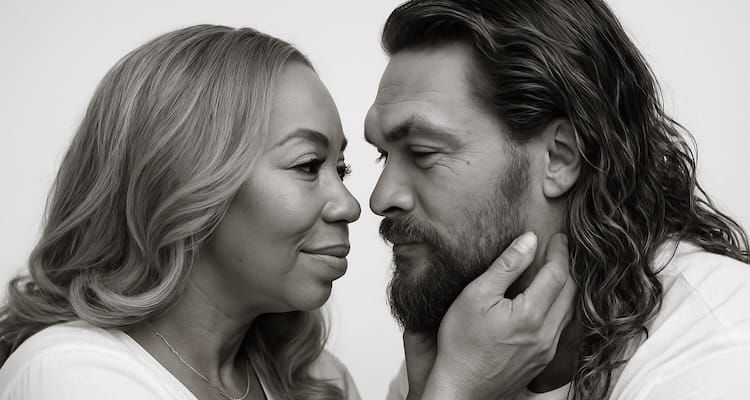
A few weeks ago, I went viral for posting a set of photos I created using AI, a fictional photo shoot featuring me and Jason Momoa. (For the record: I’ve never met him.) The images looked shockingly real, intimate, cinematic and romantic. I made them entirely on my phone using a detailed prompt in ChatGPT’s image model. No Photoshop. No retouching. Just data and design.
In under 30 minutes, I had six perfect photos. And, in 24 hours, a viral post, and the internet had questions.
– “How did you do this?”
– “Why does it look so real?”
– “Isn’t this dangerous?”
Yes, it is. And that’s exactly the point.
Today, anyone can replicate a voice or face from a single video clip or social media post. With just a few images and seconds of audio, AI can generate convincing videos that blur truth and fiction. That means your teenager, your spouse, pastor, government official or even you could be placed into a fake yet believable digital scene. It’s thrilling when used creatively. It’s terrifying when used maliciously. That’s why AI safety matters and it is my pivot into a new career and passion.
Artificial intelligence isn’t just another technology trend. It’s an arms race one driven by national security, economic competition and human curiosity. The United States, China and others are racing toward something called artificial general intelligence (AGI) machines that can think and reason like humans. The stakes are enormous, and so are the risks.
As creators, consumers and citizens, we must ask:
– How will we verify truth when reality itself can be generated?
– What safeguards protect our likeness, identity and voice?
Because the next viral photo might not be as harmless as mine.
AI Safety Lesson:
Before you share, click or believe, please pause. If you didn’t record it, it may not be real. Learn how deepfakes work and talk to your kids, colleagues and communities about the power and responsibility that comes with this technology. Create a family “safe” word.
For more on AI safety and the global race to AGI, visit www.ai2027.com.
To learn more about me or my musings on AI follow my substack at https://substack.com/@beingkarenalston or on LinkedIn at https://www.linkedin.com/in/karenmariaalston