Designing with AI: Why you need a process, and the State Department map that proves it
By Todd Post
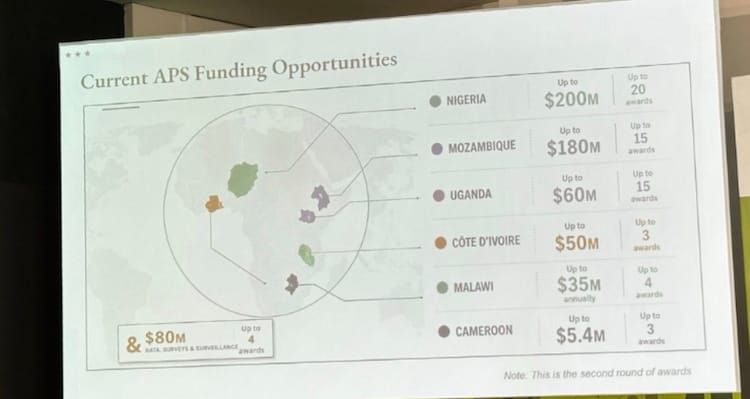
At a pre-conference session of the AIDS 2026 conference in Rio de Janeiro in July, with senior African health officials in the audience, the United States presented its plan for funding their countries. The slide behind the podium was a map of Africa, and just about every country on it was wrong.
A senior U.S. health envoy who oversees the President’s Emergency Plan for AIDS Relief (PEPFAR) showed a map on which all six highlighted countries were misplaced or mislabeled. Nigeria landed in the Sahara. Mozambique showed up in the Horn of Africa. Côte d’Ivoire moved to southern Africa nowhere near a coast. Uganda and Malawi were drawn with the wrong borders. Cameroon was labeled but given no territory at all. Attendees photographed the screen, and the images were circulating online within hours after Emily Bass published the slide to her Substack, To End a Plague … Again.
As NBC News reported, Reuters found a watermark on the image indicating it was made with an OpenAI tool. The State Department apologized and said a staff member had hastily changed the slides shortly before the event.
That last detail is the one that communicators should think about, because it’s the situation we’re all in now. A senior leader or client realizes after hours that they need something for a meeting tomorrow. The designer is gone for the day. AI is available, it takes a minute, and what comes out the other end looks finished.
Two things went wrong in Rio and only one of them was the AI. Someone used a generative tool when clip art of an actual map would have served. Then, whatever review process was used on the slide, it didn’t catch that Nigeria moved to the Sahara, or any of the other errors it contained. As a result, the international audience saw an incorrect slide on the screen behind the presenter. Whether it was a rushed turnaround or the wrong file, no one between the AI prompt and the projector caught it.
It’s tempting to swing the pendulum too far the other way, restricting the tools and requiring that every design request go through a designer. A policy that works until the first after-hours emergency isn’t a policy. Policies for designing with AI should include:
- Don’t use AI when clip art will serve
- Use a human designer when feasible
- Always have a human designer check the AI graphic
- Train staff on how to write prompts
- Create a style manual with standards for the final output
- Make everyone in the chain of command responsible for reviewing and verifying the quality and accuracy of the AI graphic, from the person who produced it to their manager to the end user
- Document the reviews and approvals
Most of that list is about verification rather than about AI, and that’s deliberate. When I managed a creative services team, the part of our process that saved us was never the design software. It was the routing slip that documented who created something, who reviewed it, and who signed off on it.
Time crunches will always be the argument for skipping those steps. To paraphrase the old UPI maxim, get it done fast, but first, get it right. Otherwise, you may spend more time on damage control than checking it would have taken. If you’re going to bypass the human designer, there must be human reviewers and approvers in their place.
Just because something was produced by AI doesn’t absolve the humans of responsibility for the outcome. I recently watched bodycam video of a traffic stop where a Tesla owner argued he shouldn’t get a ticket for doing 64 in a 45 because he wasn’t driving, the car was. The officer pointed out that the owner was still sitting in the driver’s seat and wrote the ticket anyway.
Whoever clicks generate is in the driver’s seat, but so is everyone the file passed through afterward, whether they looked at it or not.
About the Author
Todd Post is a communications and public affairs strategist who has worked at PR agencies, nonprofits, and across the federal government. He served as Senior Public Affairs Advisor for the Office of Infectious Disease and HIV/AIDS Policy at the U.S. Department of Health and Human Services.
Photo: Emily Bass