Marketing to Gen Z
By Kelly Callahan-Poe
As a group, Generation Z, AKA Gen Z, in their tweens to mid-twenties (9-24), are the most digitally native generation. Understanding their media habits, how they communicate, on what platforms, and to whom,is essential for today’s marketers.
In January 2022, Williams Whittle, in conjunction with research firm KB Insights, conducted a survey of Gen Z throughout the United States in order to understand their media habits and preferences. Key findings are summarized below and the full report is available upon request.
Gen Z favors text communications for everyday communications. Phone was rarely a preferred method of communication. In fact, only about half talk with their friends on the phone. Email was almost never a preferred communications means. Almost all respondents communicated with friends via text and/or in-person.
Social media is one of, if not the most powerful means to deliver information to Gen Z as most spend 1-3 hours per day on social media. The three social media platforms used most often to communicate with friends are Snapchat, FaceTime and Instagram. Overall, Instagram is the most popular social media platform by far followed by SnapChat, then TikTok and YouTube.
Almost all respondents said they post on social media. When they do, they usually include a photo or video. As such, creating shareable content is key to social media marketing.
A significant percentage of Gen Z is influenced by content shared by influencers and celebrities, who are often one in the same. Most listen to podcasts. The types of podcasts to which they listen are varied, from comedy to news to celebrity content.
The majority have clicked on social media ads before and most of them have made a purchase, either on their own or with the help of their parent/guardian. About a third have made a charitable donation via social media with a median dollar value of $11-$50. The causes that Gen Z cares about the most include poverty, health, environmental and racial justice issues.
Nearly all respondents acknowledged the downsides of social media on their mental health. The majority said social media provides both positive and negative impacts. Only 4% said social media was purely positive. The top negative impacts on mental health are the comparison to others, making them feel bad about themselves, the time they waste, and the draining aspect of too much time on social media.
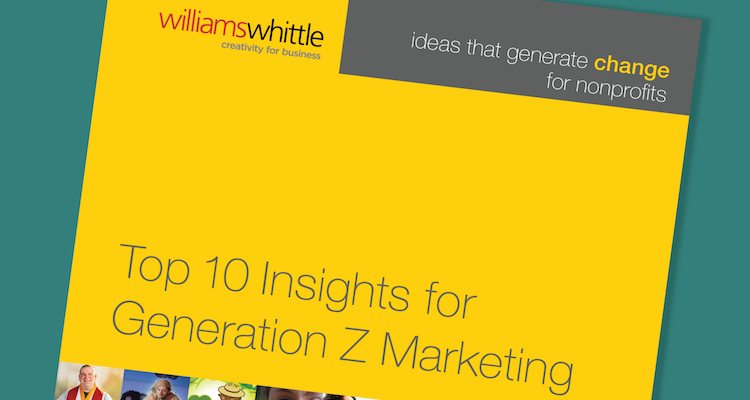
Click here to download the full report of the Top 10 Insights for Gen Z Marketing.
For more on “Ideas that Generate Change for Nonprofits”, visit williamswhittle.com.
Williams Whittle is a Capitol Communicator sponsor.
Kelly Callahan-Poe is President of Williams Whittle